

Tax Strategy & Roth Conversions
Keep More of What You’ve Worked Hard to Save
Retirement doesn’t mean your relationship with taxes comes to an end.
Income from Social Security, retirement accounts, pensions, investments, and required distributions can all affect how much of your money stays in your pocket and how much goes to taxes. Without a plan, taxes can quietly become one of the largest expenses you face during retirement.
We help individuals and families in New Jersey develop retirement tax strategies designed to help them make informed decisions, reduce unnecessary tax burdens, and create greater flexibility for the future.
Looking Beyond This Year’s Tax Return

Many financial decisions have tax consequences that extend far beyond a single year. By looking at the bigger picture, we help connect today’s decisions with tomorrow’s opportunities.
Questions we frequently help clients answer include:
- Will my retirement account withdrawals increase my tax bill?
- How will Social Security affect my taxable income?
- Can I reduce future required minimum distributions?
- Should I consider a Roth conversion?
- How can I create tax diversification in retirement?
- Will higher income affect my Medicare premiums?
- How can I leave assets to my family in the most tax-efficient way possible?
Understanding Roth Conversions
One strategy that may be appropriate for some retirees is a Roth IRA conversion.
A Roth conversion involves moving money from a Traditional IRA into a Roth IRA. The amount converted is generally taxable in the year of the conversion, which often causes people to ask an important question:
Why voluntarily pay taxes now?
In some situations, paying taxes today at a known rate may help reduce future tax obligations.
For individuals with substantial IRA balances, future Required Minimum Distributions (RMDs) may create larger taxable income later in retirement. Strategic Roth conversions can potentially reduce future RMDs while moving assets into an account that offers tax-free growth and tax-free qualified withdrawals.
Every situation is different, so timing and planning matter.
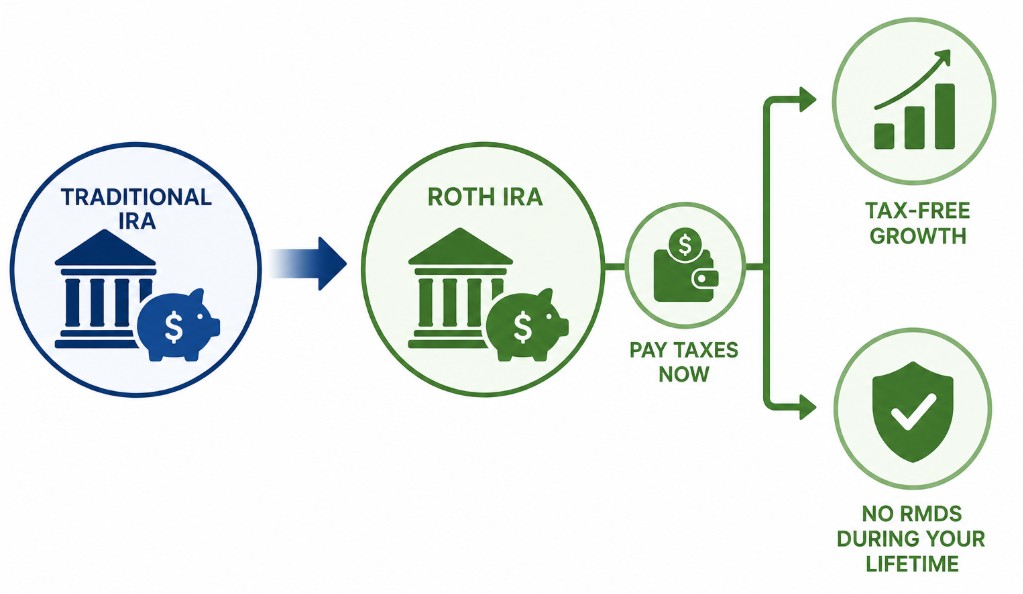
For illustrative purposes only. No specific investments were used in this example. Investments are subject to risk, including the loss of principal. Actual results will vary.

Creating Tax Flexibility in Retirement
Many retirees have most of their savings concentrated in tax-deferred accounts such as traditional IRAs and 401(k)s. Building a mix of taxable, tax-deferred, and tax-free assets may create greater flexibility when retirement income needs change.
This flexibility can provide additional options when managing withdrawals, responding to tax law changes, or navigating unexpected expenses. The goal isn’t necessarily paying the least tax this year. The goal is making thoughtful decisions that support your long-term financial objectives.
Questions About Roth Conversions
Build a Retirement Strategy That Includes Taxes
Taxes touch nearly every aspect of retirement planning. Social Security, investment income, retirement account withdrawals, Medicare costs, and estate planning decisions can all be affected by how and when income is recognized.
A thoughtful tax strategy can help you better understand your options and make decisions with greater confidence.
At Safe Harbor Wealth Management, we help clients evaluate retirement tax strategies, Roth conversion opportunities, and income planning decisions that support their long-term goals.